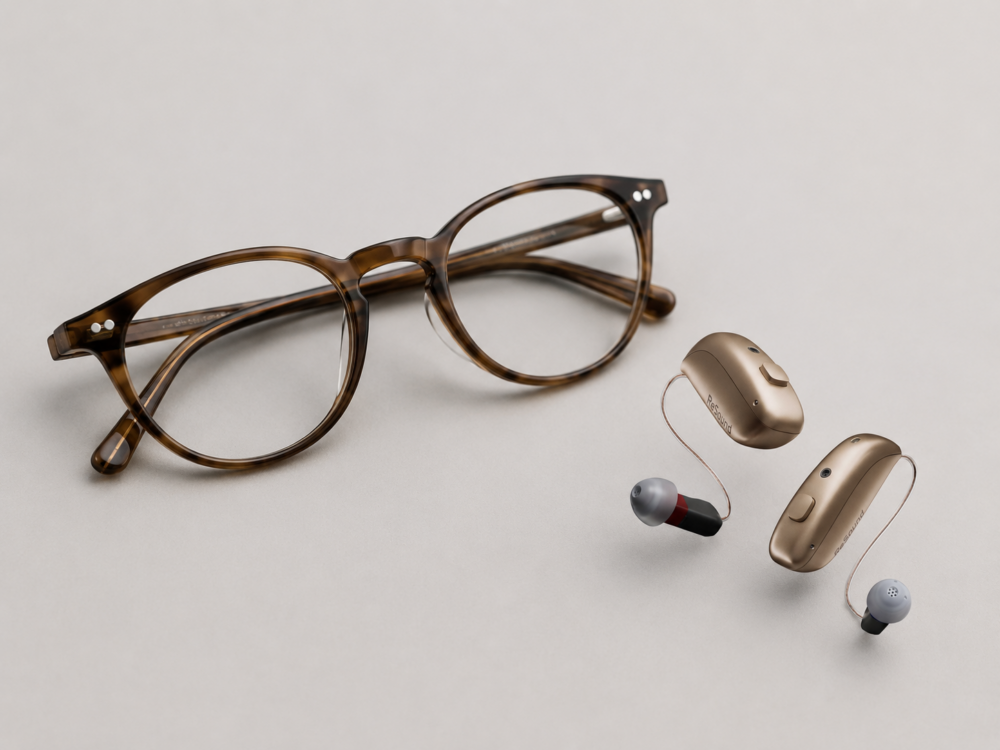
Understanding the Journey to Better Hearing

One of the most common questions hearing care professionals hear is:
“Why can’t hearing aids work like glasses?”
It’s an understandable comparison. When someone puts on a new pair of glasses, the improvement is often immediate. Vision becomes sharper, details become clearer, and the world comes into focus almost instantly.

Hearing aids, however, often require follow-up appointments, adjustments, and a period of adaptation before users experience their full benefits.

At first glance, that difference can seem frustrating. But hearing and vision function in fundamentally different ways, and understanding those differences is essential to understanding why hearing care is a journey rather than a one-time solution.

Hearing Aids Do More Than Make Sounds Louder

When we prescribe glasses, we are primarily correcting a mechanical issue. Light enters the eye, passes through a lens, and is focused more accurately onto the retina. The brain quickly recognizes the sharper image because the visual system has been receiving information all along.

Hearing loss is different.

For many people, hearing loss develops gradually over years. During that time, the brain receives less sound information, particularly in certain frequencies that are important for understanding speech. As a result, the auditory system can become less active and less efficient at processing the sounds that support communication and awareness.

When hearing aids are introduced, they don’t simply make sounds louder. They restore access to sounds that may have been reduced or missing for years. This requires adjustment, learning, and adaptation.

In many ways, hearing aids support not only the ears but also the brain’s ability to interpret sound effectively.


How sound travels to your brain. PC www.youtube.com/@HearSoundly


Why Fine-Tuning/Follow-Up Appointments Matters

Many new hearing aid users wonder why adjustments are needed after fitting.
The answer lies in the complexity of hearing itself.

Vision is relatively stable. Sound is constantly changing. Conversations happen in noisy restaurants, busy workplaces, family gatherings, and moving vehicles. Every listening environment presents unique challenges.

Modern hearing aids use sophisticated digital technology to analyze and adapt to these environments in real time. However, every person’s hearing loss, listening preferences, and lifestyle are different.
Follow-up/ Fine-tuning appointments allow hearing care professionals to:

  • Improve speech clarity and understanding
  • Optimize performance in challenging listening environments
  • Enhance comfort throughout the day
  • Reduce unwanted background noise
  • Adapt settings based on real-world experiences
  • Support the brain’s ongoing adaptation process

These appointments are not signs that the device is failing. They are signs that the hearing journey is progressing and play an important role in achieving the best possible hearing outcomes.

The Brain Needs Time to Adapt/ Relearn Sound

Many first-time users report hearing sounds they haven’t noticed in years:

  • The hum of a refrigerator
  • The ticking of a clock
  • Rustling paper
  • Footsteps
  • Running water
  • Birds chirping

While these sounds have always been present, hearing loss may have reduced the brain’s access to them over time.
As hearing improves, the brain begins the process of sorting and prioritizing sounds again. Over time, what initially feels unfamiliar/overwhelming becomes natural and comfortable as the auditory system adapts.
This process, known as acclimatization, is one of the key reasons for ongoing support and follow-up care, rather than a single appointment.

The Hidden Challenge: Waiting Too Long

Perhaps the biggest obstacle in hearing healthcare is not technology, it’s timing.
Every year, millions of people take hearing tests and discover they have hearing loss. Yet many decide to postpone treatment.
Not because they don’t need help.
But because they are not ready.
For some, hearing aids carry a stigma. They may associate them with aging or declining independence. For others, cost, uncertainty, or fear of change creates hesitation.
As a result, many people continue to cope by:

  • Turning up the television volume
  • Asking others to repeat themselves
  • Avoiding noisy social situations
  • Relying on family members to fill in missed information

These strategies may help temporarily, but they do not address the underlying hearing loss.
Over time, untreated hearing difficulties can affect communication, confidence, social engagement, and overall quality of life.

The Importance of Early Intervention

Hearing healthcare doesn’t have to be an all-or-nothing decision. For some individuals, taking the first step may involve a comprehensive hearing assessment. For others, it may involve exploring emerging hearing technologies or assistive listening solutions that fit comfortably into their lifestyle.
The sooner hearing difficulties are addressed, the greater the opportunity to maintain strong communication habits and hearing health.

Role of Hearing Aids and early hearing intervention

Hearing aids are not just about amplifying sound.
They help:
1. To Reduce the effort needed to listen
Hearing loss makes the brain work harder to understand speech. Using hearing aids reduces this effort, freeing up brain resources for memory and thinking, think of it as giving the brain a “rest” from constant strain.
2. Improve communication
Untreated hearing loss can lead to isolation and cognitive decline. Hearing aids restore communication, strengthen social connections, and support long-term cognitive health.
3. Keep the brain actively engaged
Recent studies suggest that people who use hearing aids may experience a slower rate of cognitive decline, especially when intervention happens early.
4. Improve daily functioning
Hearing aids significantly enhance quality of life by improving conversations, phone communication, TV listening, social participation, and overall confidence and independence.


The Technology Behind Better Hearing

Modern hearing aids are among the most advanced wearable technologies available today. Far from being simple amplifiers, they are sophisticated devices designed to help users hear more naturally across a wide range of listening environments.
High-quality hearing aids can provide:

  • Advanced sound processing
  • Adaptive noise reduction
  • Directional microphones
  • Wireless connectivity
  • Rechargeable power systems
  • Personalized programming based on individual hearing needs

These features help users distinguish speech from background noise, reduce listening effort, and participate more comfortably in everyday conversations.

Creating effective hearing aids requires extensive research, engineering, and clinical testing.
Inside the devices are miniature microphones, powerful digital processors, and intelligent software systems working together in real time. These technologies continuously analyze the listening environment and make adjustments to improve sound quality and speech understanding.
Manufacturers invest heavily in research and development to improve battery performance, connectivity, artificial intelligence, sound processing, and personalization capabilities.
The goal is simple: to provide users with clearer hearing, greater comfort, and a more natural listening experience.

Hearing Health Is a Journey

The goal of hearing care is not simply to fit a device.
It is to improve communication, confidence, and quality of life.
The most important step is recognizing that hearing health deserves attention and action.
The journey toward better hearing rarely starts with a perfect solution on day one. It starts with awareness, support, and a willingness to take the first step.
It’s about staying connected to the people, conversations, and experiences that enrich life.