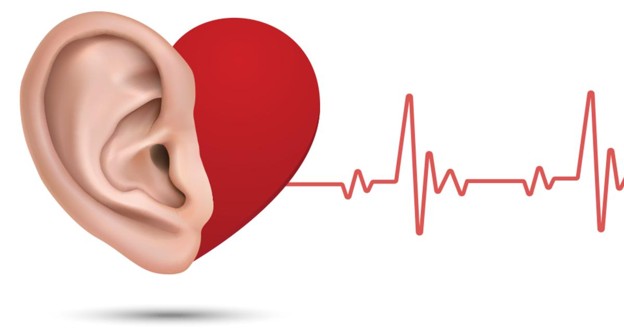
When we think about heart health, we usually think about blood pressure, cholesterol, and keeping our heart strong. But did you know that good blood circulation is also important for your hearing?
Your ears are made up of tiny, delicate structures that need a steady supply of blood and oxygen to work properly.
Research suggests that certain health conditions, including high blood pressure, diabetes, and heart disease, may be linked to hearing loss.
Let’s explore why this happens and what you can do to look after your hearing. |
|
 |
| Source : American academy of audiology
|
|
1. Why Is Blood Circulation Important for Hearing?
Inside your ear is a small, spiral-shaped structure called the cochlea. Its job is to turn sounds into signals that your brain can understand.
The cochlea contains thousands of tiny sensory hair cells that help you hear everything from conversations to music and birds singing.
These delicate cells rely on a healthy supply of blood and oxygen to function.
When blood circulation is affected, the inner ear may not receive everything it needs to work at its best.
Unlike some other cells in the body, damaged sensory hair cells in the human cochlea do not naturally grow back.
This is one reason why looking after your overall health is important for your hearing, too. |
|
 |
| Blood supply to ear. Source: https://trywellim.com/pages/3-myths-spinning
|
|
2. Can High Blood Pressure Affect Your Hearing?
High blood pressure, also called hypertension, can affect blood vessels throughout your body, including the tiny vessels supplying your inner ear.
Over time, changes in these blood vessels may interfere with the inner ear’s normal function.
A large research review found that people with high blood pressure were more likely to experience hearing loss than those without it (Jin et al., 2025).
However, this does not mean that everyone with high blood pressure will develop hearing problems. |
|
 |
| Source: chatgpt, OpenAI
|
|
What can you do?
If you have high blood pressure, continue following your doctor’s advice to manage it. If you notice changes in your hearing, consider arranging a hearing assessment. |
|
3. What About Diabetes and Hearing Loss?
Diabetes affects the way your body manages blood sugar. Over time, high blood sugar can damage small blood vessels and nerves.
These changes may also affect the delicate structures of the inner ear.
A study reviewing research involving more than 20,000 people found that adults with diabetes were more likely to have hearing difficulties than those without diabetes (Horikawa et al., 2013). |
|
 |
| Diabetes monitoring. Source: https://www.teladochealth.com/library/article/what-is-paired-checking
|
|
Hearing loss can develop gradually, so you may not notice it immediately.
Some early signs include:
- Asking people to repeat themselves more often.
- Finding conversations difficult in restaurants or crowded places.
- Increasing the television volume.
- Feeling that people are mumbling.
- Having difficulty understanding speech even when you can hear someone talking.
If these situations sound familiar, a hearing assessment can help you understand what is happening. |
|
4. Is There a Link Between Heart Disease and Hearing Loss?
Researchers have also explored whether hearing loss is connected to heart disease and stroke.
A large review of studies involving more than 1.6 million participants found that hearing loss was associated with a higher likelihood of certain cardiovascular conditions, including coronary artery disease and stroke (Tan et al., 2024).
One possible explanation is that hearing and cardiovascular health share common risk factors, such as aging, diabetes, and changes in blood vessel function.
However, it is important to understand that having hearing loss does not mean you have heart disease, and hearing loss itself has not been shown to cause heart disease.
The research simply reminds us that our hearing is connected to our overall health. |
|
5. Can a Healthy Lifestyle Help Your Hearing?
Taking care of your heart supports your general health and may also help maintain the healthy circulation that your ears depend on.
Here are some simple habits worth following:
- Keep your blood pressure under control. Follow your doctor’s advice and attend regular checkups.
- Manage your blood sugar. If you have diabetes, keeping it well managed is important for your overall health.
- Stay physically active. Regular exercise supports healthy circulation.
- Eat a balanced diet. Include nutritious foods that support heart health.
- Avoid smoking. Smoking can damage blood vessels and affect circulation.
- Protect your ears from loud noise. Use appropriate hearing protection when necessary.
- Pay attention to hearing changes. Don’t ignore persistent difficulty hearing or understanding conversations.
Although healthy habits support overall well-being, they cannot guarantee that hearing loss will be prevented. |
|
6. When Should You Have Your Hearing Checked?
Hearing loss often develops slowly, making it difficult to recognize the early signs.
You may notice that conversations are becoming harder to follow, especially in noisy environments, or that you need to concentrate more to understand what others are saying.
If you have diabetes, high blood pressure, or cardiovascular disease, it is worth discussing your hearing health with your healthcare provider, particularly if you have noticed any changes.
A comprehensive hearing assessment can help identify hearing difficulties and determine whether further medical evaluation or hearing rehabilitation is needed.
Important: If you experience sudden hearing loss in one or both ears, seek urgent medical attention. Sudden hearing loss can be a medical emergency and should not be left until a routine hearing appointment. |
|
 |
| Source: chatgpt, OpenAI
|
|
7. Healthy Hearing Is Part of a Healthy Life
Your ears do much more than help you hear sounds. They help you communicate, stay connected with loved ones, and participate confidently in everyday activities.
The connection between cardiovascular health and hearing is still being studied, but the message is clear: your hearing deserves the same attention as the rest of your health.
At Houri Hearing, we believe that hearing healthcare is about more than hearing aids.
Our team focuses on understanding your individual needs, providing comprehensive hearing assessments, and guiding you toward the most appropriate hearing solutions.
Whether you have noticed changes in your hearing or simply want to understand your hearing health better, taking the first step can make a meaningful difference. |
|
Take care of your heart. Take care of your hearing. Stay connected to what matters.
|
|
References
Horikawa, C., Kodama, S., Tanaka, S., Fujihara, K., Hirasawa, R., Yachi, Y., Shimano, H., Yamada, N., Saito, K., & Sone, H. (2013). Diabetes and risk of hearing impairment in adults: A meta-analysis. The Journal of Clinical Endocrinology & Metabolism, 98(1), 51–58. https://doi.org/10.1210/jc.2012-2119
Jin, X., Xu, X., Wang, J., Liu, X., Deng, X., & Xie, H. (2025). Association between hypertension and hearing loss: A systematic review and meta-analysis. Frontiers in Neurology, 15, Article 1470997. https://doi.org/10.3389/fneur.2024.1470997
Tan, C. J.-W., Koh, J. W. T., Tan, B. K. J., Woon, C. Y., Teo, Y. H., Ng, L. S., & Loh, W. S. (2024). Association between hearing loss and cardiovascular disease: A meta-analysis. Otolaryngology–Head and Neck Surgery, 170(3), 694–707. https://doi.org/10.1002/ohn.599 |
|
|
|